
Struggling with a picky eater? Learn why children refuse food, how pressure affects eating, and how to support your child without making things harder.
If you’ve ever sat at the table thinking, “I know this isn’t helping… but I don’t know what else to do”, then I want you to know you’re not doing it wrong. You’re responding to something that feels genuinely hard.
Because when your child refuses food, there isn’t one clear answer.
Most parents find themselves trying different approaches, sometimes several in the same meal, just to try and get through it. And all of it comes from the same place - wanting your child to be okay.
Why it can feel so confusing
Parents often ask me “Why is my child such a picky eater?”, or “Why do they refuse food, even when I try to help?”
For some parents, this situation looks like:
- encouraging one more bite
- coaxing, guiding, or closely watching what’s eaten
- feeling responsible for making sure “enough” goes in
For others, it looks more like:
- sticking just to foods you know will be accepted
- thinking “what’s the point, they won’t eat it anyway”
- avoiding certain foods or situations to keep the peace
And many parents move between both. Trying to help, trying to protect, trying to make things easier.
From a paediatric nutrition perspective, both of these responses make complete sense. But over time, they can sometimes keep things feeling… stuck. If you’re unsure whether your child’s eating sits within a typical range, you might find this helpful:
Is picky eating normal? How common it is, and when to seek support
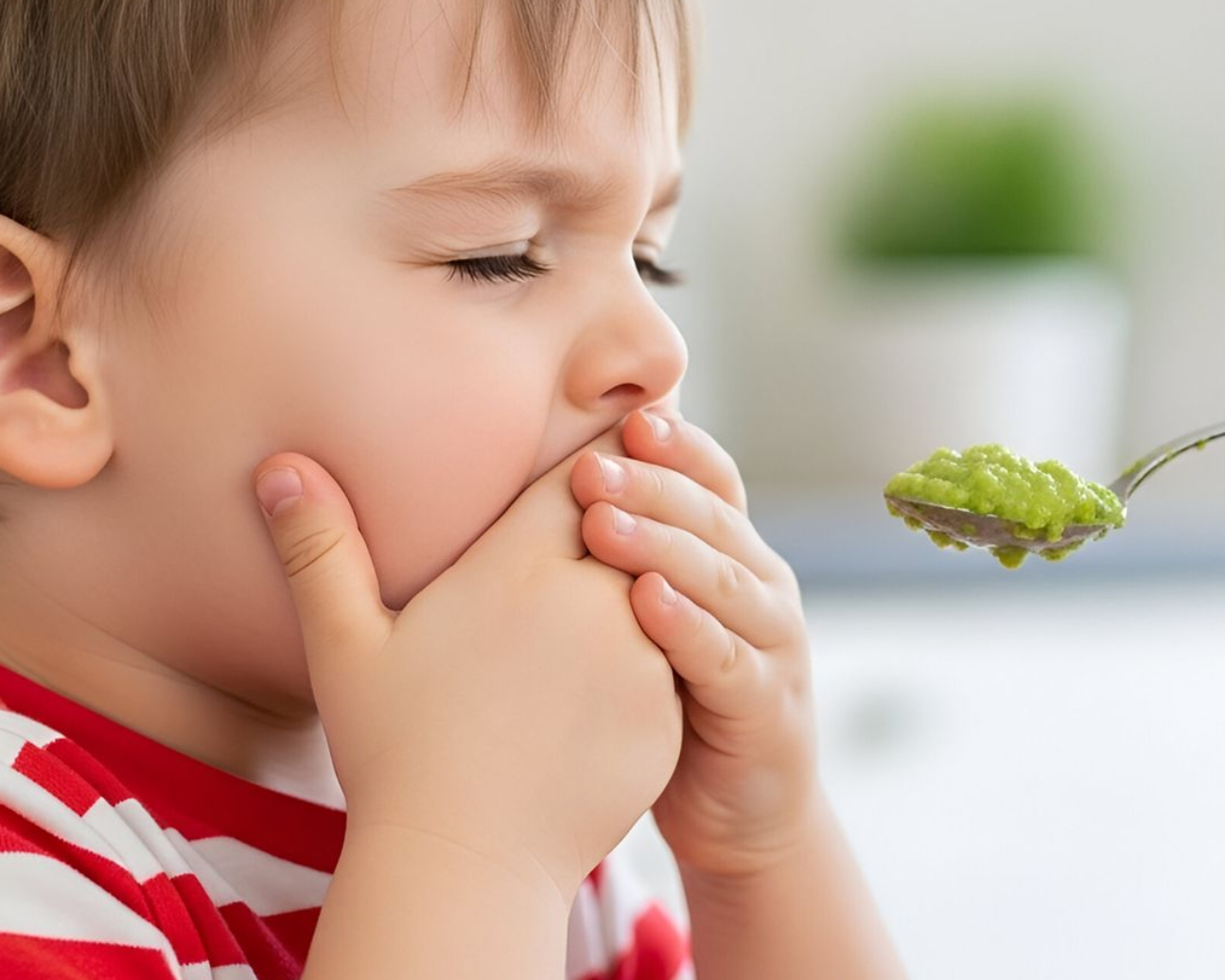
Why does my child refuse food?
One of the most helpful shifts is understanding how children experience these moments. When food feels pressured, even mildly, a child’s body doesn’t interpret that as encouragement. It interprets it as stress. When stress rises:
- Appetite naturally drops
- Curiosity switches off
- The nervous system moves into protection mode
It’s not stubbornness. And it’s not defiance. It’s biology.
Pressure isn’t the whole picture, though. Sometimes, in trying to avoid that stress or prevent a battle, we go the other way and:
- Offer only “safe” foods
- Stop putting new or previously rejected foods on the plate
- Lower expectations altogether
Completely understandable, especially if you’ve already experienced tears, refusals and mealtimes that feel hard. But children can only build familiarity with foods when they are given the opportunity to:
- See
- Explore
- Come back to (again and again, over time)
Without pressure, or expectation. Without that exposure, food variety often stays very limited - not because a child won’t try, but because they haven’t had enough safe opportunities to learn about it.
Food refusal is usually communication, not behaviour
When a child refuses food, it’s rarely about being difficult. It’s often communication. It might look like:
- Sensory sensitivity (taste, texture, smell)
- Anxiety or uncertainty
- Feeling overwhelmed at the table
- pressure they don’t yet have words for
When we understand the cause, the goal shifts. It’s no longer about getting food in; it’s about making food feel safe enough to approach.
What actually helps: how to support a picky eater without pressure
Reducing pressure doesn’t mean stepping back completely. And offering food doesn’t mean pushing or persuading. From a paediatric nutrition perspective, one of the most helpful frameworks is responsive feeding, which works on the principle of:
- Adults decide what food is offered, and when
- Children decide whether they eat, and how much
In practice, this means:
- Offering a range of foods regularly, without pressure or expectation
- Allowing children to engage with food in their own way and time
- Trusting patterns across days and weeks, not single meals
- Creating repeated, low-stress exposure
Familiarity isn’t built in one meal; it’s built slowly, through safe, consistent opportunity.
What this can look like in real life
Often, the changes here are quiet. Parents tell me things like:
- “I stopped commenting, and everything felt calmer.”
- “I realised I’d stopped offering certain foods altogether.”
- “I could step back without feeling like I was neglecting anything.”
For many parents, this is where things start to feel clearer, but it can also be where new questions start to appear:
- Am I offering enough?
- What if they refuse again?
- Should I step in, or take a step back?
It’s not because you’re doing it wrong – it’s because applying this at home, with your own child, can feel so much harder than understanding it on paper. It’s normal for second-guessing to creep back in. If this is the stage you’re in, you may find my post on when to get support helpful: Meals feel manageable but exhausting; is that reason enough to seek support?

Where to go from here
If you're reading this and thinking, "this all makes sense… but I'm not quite sure how to put it into practice", that's completely normal. Applying this at home, with your own child, in real moments with real emotions, is where it can feel so much harder than understanding it on paper. You don't need to figure it out alone. If you're not sure whether support would feel helpful right now, my free reflection guide is a good place to start. It's designed to help you pause, notice what's happening, and work out what feels right for your family, without any pressure.
If you're ready to explore more structured support, inside Picky Eater Parenting, we focus on:
- Understanding why food feels hard for your child
- Reducing pressure at mealtimes
- Keeping opportunities for exposure without stress
- Helping you feel calmer, clearer, and more confident in your role — even when things don't go to plan
No quick fixes. No pressure. No "just one more bite." Just clear, supportive guidance that helps mealtimes become calmer — for you and your child.
Lucy
X